
Department of Medicine at ZSFG | 2026 Update

Meeting Challenges Through Accomplishment, Action, and Advocacy
This year has brought substantial challenges to the ZSFG Department of Medicine. Changes in Medicaid policy threaten city and hospital budgets, research funding remains uncertain, and the demands of caring for patients with complex medical and social needs continue to grow within our current physical footprint and with increasingly constrained resources. These pressures affect every aspect of our clinical, research, and educational missions. Yet I have also seen how our faculty and staff respond: with resourcefulness, a commitment to one another, and a determination to advocate for the patients and communities we serve. Together, we have found a way to turn our anxiety into accomplishments, action, and advocacy.
Budget Challenges
The City and County of San Francisco and the San Francisco Department of Public Health (DPH) faced a difficult fiscal year 2027 budget, including a potential $300 million loss associated with provisions of H.R. 1 and costs rising faster than revenues. Reductions across city departments followed. In partnership with DPH, the vice dean’s office worked to limit the effects on the UCSF–DPH affiliation agreement and School of Medicine departments at ZSFG, in part by improving revenue capture and administrative efficiency. These efforts have helped, but important pressures remain. We are particularly concerned about the anticipated winter increase in inpatient medicine volume without corresponding resources. We continue to work across departments to protect patient care and address the demands placed on our clinicians.
Faculty and Staff Dedication and Excellence
Even under these constraints, our faculty and staff have advanced research, strengthened clinical care, and invested in the next generation of clinicians and scientists. The Division of Hematology and Oncology convened an interdisciplinary cancer research symposium that brought faculty, trainees, and staff together to examine the medical and social determinants of disparities in cancer incidence, illness, and mortality. The symposium exemplified an important strength of ZSFG: the ability to bring clinical experience, scientific inquiry, and an understanding of the communities we serve to the same table.

Our faculty awards ceremony recognized twelve colleagues whose contributions span the breadth of our mission. These awards reflect the breadth of expertise and dedication on which a public academic hospital depends:
- Triveni DeFries for diversity, equity, and inclusion
- Anna Chodos for clinical innovation
- Tessa Kaplan for care experience
- Andrew Kerkhoff for outstanding early research
- Niharika Dixit for professional altruism
- Margot Kushel for excellence in internal medicine
- Colin Feuille for subspecialty consultation
- Jamie Yao for performance and quality improvement
- Luis Garcia for outstanding clinical fellowship
- Oliver Bacon for volunteer service
- Harini Sarathy for medical education
- Rebeccah Brusca for mentoring
At our annual staff appreciation event, we honored six colleagues whose work makes our missions possible:

• Kelly Musoke for leadership
• Meredith Lew Tan for administrative service
• Beatrice Huang and Denise Guevarra for research
• Erin Pederson and Gio Sotelo Solari for patient care
The Alberto Rangel Patient Care Award is newly named in memory of a deeply valued behavioral health clinician whose compassion, humanity, and commitment left a lasting mark on ZSFG. His tragic death in December 2025 was a profound loss to our department and campus. Naming this award for him recognizes the standard of care and service he embodied.
Faculty and Staff Well-Being
The most recent Professional Well-being Academic Consortium survey offered encouraging evidence of the strength of our community. Compared with national benchmarks for internal medicine attending physicians at academic medical centers, ZSFG faculty reported higher levels of professional fulfillment, collegiality, alignment between personal and organizational values, and belonging. More clinicians also reported that concerns are discussed and lead to changes—an important measure of whether people feel heard. At the same time, lower ratings for clinical efficiency and resources confirm concerns faculty have raised directly. We cannot resolve every constraint locally, but we can use these findings to identify priorities and work with DPH on practical improvements.
The 2026 Gallup Staff Engagement Survey similarly showed strong engagement, grounded in a shared sense of purpose, colleagues committed to high-quality work, supportive supervisors, and clear expectations. An increased proportion of staff expect to remain with the organization, an especially welcome finding in a demanding environment. The survey also identified areas requiring attention: career development, administrative processes, transportation and commuting, and the tools and resources needed to do excellent work. Together, these surveys underscore both the strength of our community and the importance of providing the resources and support our faculty and staff need to succeed.
Our Commitment to a Safe Work Environment
A safe environment for patients, staff, faculty, and learners is fundamental to our work. At a large public hospital, maintaining that environment requires sustained attention rather than a single initiative. DPH has long pursued violence prevention, security improvements, and campus safety measures. Over the past year, these efforts have been informed by a DOM survey that generated hundreds of responses and suggestions from faculty and staff. We shared this feedback with our partners to help shape improvements that address concerns encountered in daily work.
Several changes are now visible across campus. Brighter LED lighting and additional fixtures have improved pedestrian routes, particularly in the evening, while tree and shrub trimming has increased visibility. Entrance security has also expanded. Weapons detection technology introduced at Buildings 5 and 25 in July 2025 was extended to Building 80/90, along with a primary entry point, an additional accessible entrance, increased security presence, and a process for managing patient belongings. The technology screens for potential weapons while allowing patients, visitors, and staff to move through entrances. Camera coverage has also expanded, emergency duress devices have been tested, and portable call stations have been added in the garage.
Safety also depends on clear communication and reliable support. Emergency notifications to employees have been better coordinated, and safety information is more accessible. Campus patrols operate around the clock, with particular attention to routes between work sites, parking, and transit. Security officers conduct evening walkthroughs of the SFMTA garage, and escorts are available for staff traveling between vehicles and campus.
More than 100 DPH safety leaders have received training in situational awareness, prevention, and how to seek assistance. The DPH Threat Management Team has expanded its role in assessing concerning behavior and potential threats. A medical-surgical Workplace Violence Task Force, led by Lisa Winston, MD, and Tanvi Bhakta, RN, brings together inpatient clinicians from Medicine, Family Medicine, Surgery, and Psychiatry; nursing leaders and frontline nurses; and the Behavioral Response Team. Meeting monthly, the group reviews data and cases, coordinates responses to challenging patient behaviors, and strengthens communication across disciplines. It has developed a standardized response to behavioral concerns and continues to refine communication practices, including the use of new Epic tools. The Richard Fine People's Clinic and Ward 86 have also established multidisciplinary safety committees that engage staff in identifying concerns and developing solutions.
No single measure can address every safety concern on a campus as complex as ZSFG. We must continue to evaluate these changes, adapt as conditions evolve, and listen to the people most affected. The partnership among DPH, UCSF, departmental leadership, and frontline teams remains essential to strengthening safety while preserving the accessible, compassionate environment that defines our hospital.
 Looking Ahead
What stands out this year is not simply the number of challenges we have faced, but the seriousness and generosity with which our faculty and staff have met them. They have sustained excellent care, advanced important research, supported learners, recognized colleagues, and contributed ideas that make ZSFG a better place to work and receive care. There is more to do, particularly as financial and operational pressures persist. We will continue to advocate for the resources our missions require, use those resources carefully, and work with our partners to make improvements that last. I am grateful to work alongside colleagues whose dedication, ingenuity, and commitment to our shared mission continue to move this department forward.
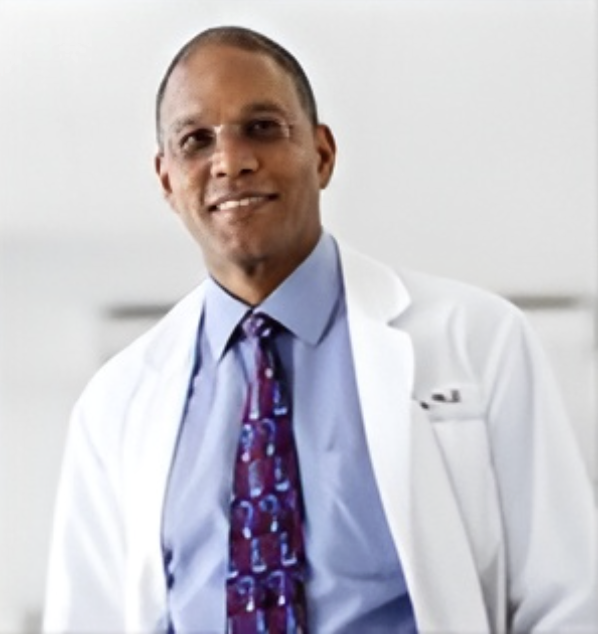 Neil Powe, MD, MBA, MPH
Chief of Medicine, Priscilla Chan and Mark Zuckerberg San Francisco General Hospital
Constance B. Wofsy Distinguished Professor
Vice-Chair of Medicine, University of California San Francisco